
 By Dakin Jill
Bringing people together sounds simple on paper, yet anyone who has organised a staff day knows how quickly it can fall flat if the activity feels forced or disconnected from real working life. That is why many businesses look to XL Events Team Building when they want something more engaging, better organised, and genuinely worthwhile for their teams.
Team Building Works Best When It Solves a Real Business Need
The strongest team building experiences are not built around ticking a box. They work because they respond to something happening inside the business. Sometimes that is a newly merged team that has not yet found its rhythm. Sometimes it is a leadership group trying to improve communication across departments. In other cases, it is a reward day after a demanding quarter, where morale matters just as much as strategy.
This is where many businesses go wrong. They choose an activity based purely on what sounds fun, without asking what outcome they actually want. A competitive challenge may suit a sales team that thrives on pace and energy, but a mixed department with quieter personalities may respond better to a format that encourages collaboration, creativity, and shared problem-solving.
When the purpose is clear from the outset, the event becomes more than a day out. It creates space for people to interact differently from how they do in meetings, emails, and project updates. That shift often reveals strengths that do not always appear in everyday office routines.
The Best Activities Create Natural Interaction
People do not usually bond because they were told to. They bond because they had a shared experience that felt real, enjoyable, and slightly outside their normal pattern. That is why well-designed team building focuses on natural interaction rather than awkward participation.
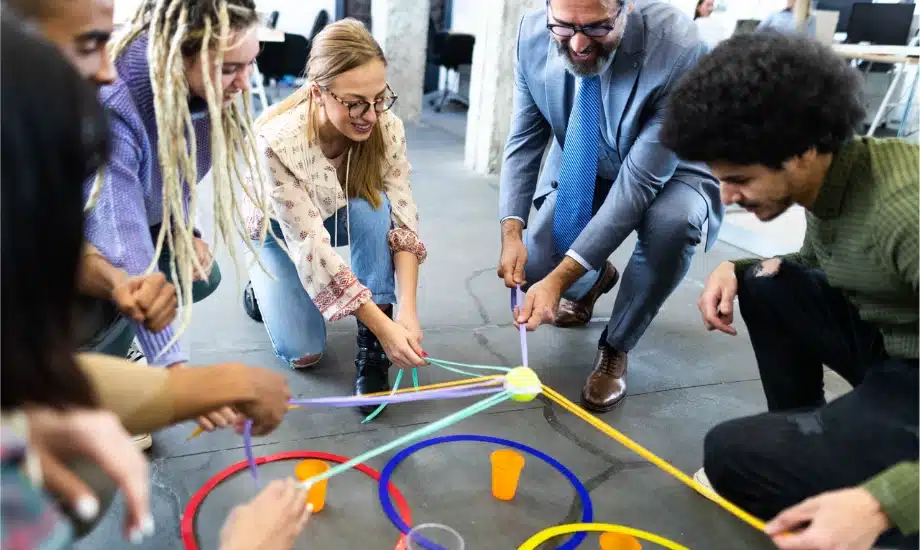
A strong format gives people something to do together, not just something to attend. Cooking challenges, problem-solving games, outdoor activities, and charity-based experiences tend to work well because they create movement, conversation, and decision-making without making anyone feel put on the spot. People become absorbed in the task, and the team dynamic develops around it.
This matters even more in workplaces where teams are hybrid or spread across different locations. Many colleagues know each other through screens, not through genuine shared time. A well-run team day can speed up familiarity in a way that months of virtual calls rarely can.
The key is balance. The activity should have enough structure to guide the group, but enough flexibility to let personalities come through. That is often where experienced event providers make the difference, because they know how to keep energy up without making the day feel over-managed.
Good Planning Shapes the Whole Experience
Even the most creative team building idea can lose impact if the logistics are poor. Timing, venue choice, group size, travel considerations, weather planning, and dietary requirements all influence how the day feels. If those details are handled badly, the activity itself has to work twice as hard.
For Australian businesses, geography plays a bigger part than many people expect. A company event in Sydney may need to account for long commutes and tight city schedules, while a Melbourne group may want something that suits a more layered programme with food, conversation, and flexible pacing. In Brisbane or Perth, outdoor options can be especially appealing, but climate and seasonal planning matter more.
That practical side is often underestimated. Teams are far more likely to engage when the day runs smoothly from the start. Easy arrival, clear scheduling, strong facilitation, and sensible pacing help people relax into the experience. Once that happens, the activity has a far better chance of achieving something meaningful.
Lasting Value Comes From What People Take Back to Work
A successful team event should not be judged only by whether people enjoyed it on the day, although that matters. The real test is what carries back into the workplace afterwards. Are people speaking more openly? Has the event helped break down silos? Do colleagues now understand each other’s working styles a little better?
Often, the most useful outcomes are subtle. A project manager notices that someone from finance has excellent problem-solving instincts under pressure. A quieter team member gains confidence after leading part of an activity. Two departments that rarely mix find common ground. Those moments can improve collaboration long after the event has ended.
This is why thoughtful team building still holds real value, even in organisations that are focused heavily on output and efficiency. Stronger relationships reduce friction. Better communication saves time. Shared experiences make teams more resilient when workloads increase or priorities shift.
A well-planned team building day is not just about giving staff a break from routine. It is about creating the kind of environment where people connect more easily, work together more effectively, and return with a stronger sense of shared momentum.